


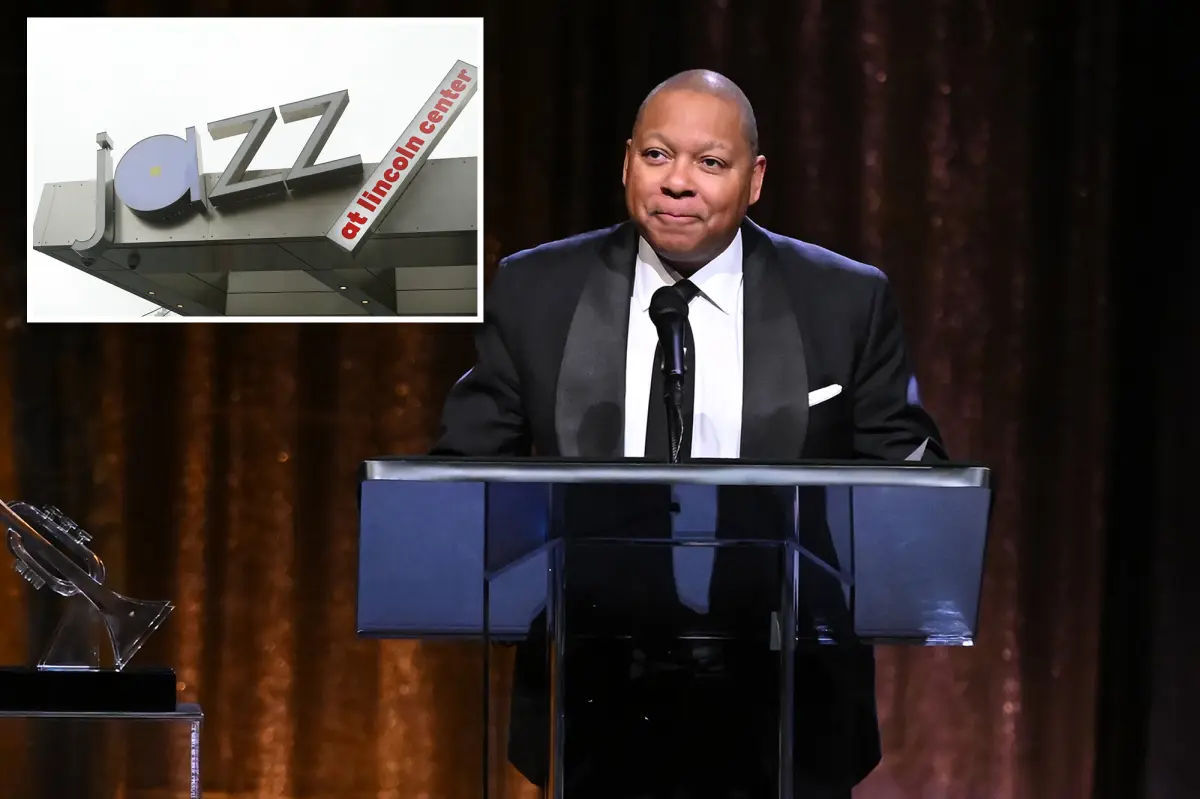
This jazz icon is leaving on a high note.
Wynton Marsalis, the legendary founder of Jazz at Lincoln Center, is expected to step back from his leadership role after nearly four decades at the helm of the organization.
The musical visionary will step down as artistic director and administrative honcho by July 2027 as the JALC looks to usher in fresh leadership to “build upon Wynton’s remarkable legacy,” the company’s board of directors said Thursday.
“When we established Jazz at Lincoln Center in 1987, our goal was to build an enduring jazz institution that would both entertain and educate multi-generational audiences to an often-overlooked aspect of American culture and I am proud of the tremendous progress we’ve made,” Marsalis said in a statement.

The famed trumpeter and composer is credited with raising the profile of jazz when he helped start JALC in 1987, at the pinnacle at his solo career.
The organization started as a summer jazz concert series and Marsalis helped to grow it into a globally-known entity.
The organization eventually opened its own permanent venue, the Frederick P. Rose Hall, known as the “House of Swing,” in Midtown Manhattan in 2004.
“Performing and nurturing the future of jazz and its musicians through JALC has been the honor of a lifetime,” Marsalis said.
“I am very grateful to my fellow artists, the board, the leadership, and the staff of Jazz at Lincoln Center, and must acknowledge the incredible desire and dedication of the [Jazz at Lincoln Center Orchestra].”
Marsalis has released more than 100 jazz, classical and alternative records since his debut in 1982.
He grew up in New Orleans, and honed his musical chops at The Juilliard School in New York City starting in 1979.

The Grammy Award winner will remain on staff in an advisory role until his contract ends in June 2028 while continuing to serve on JALC’s board in perpetuity.
He’s expected to still play with the Jazz at Lincoln Center Orchestra on occasion and at certain concerts at the House of Swing.
JALC will put together two committees; one in hopes of finding a successor for Marsalis and another to fill the executive director position after current office holder Greg Scholl’s resignation takes effect in June 2026.
“We are rich in emerging, extremely talented, capable, and inspired musicians and advocates,” Marsalis said. “I’m very confident about the future.”
The jazz institution has focused on putting on show-stopping performances and buffing up educational programs.
The board chairman, Clarence Otis, called Marsalis “among the greatest and most versatile jazz musicians and band leaders of all time.”
“Wynton dared to imagine a world in which jazz is a widely experienced and celebrated art form and has worked tirelessly for most of his life to make that dream a reality,” Otis said in a statement.
“He has also been deeply committed to educating and nurturing new generations of jazz musicians, ensuring that his unique and singular brand will be carried forward.”